Head of Land & Planning · Solar, BESS & E-methane · UK & Europe

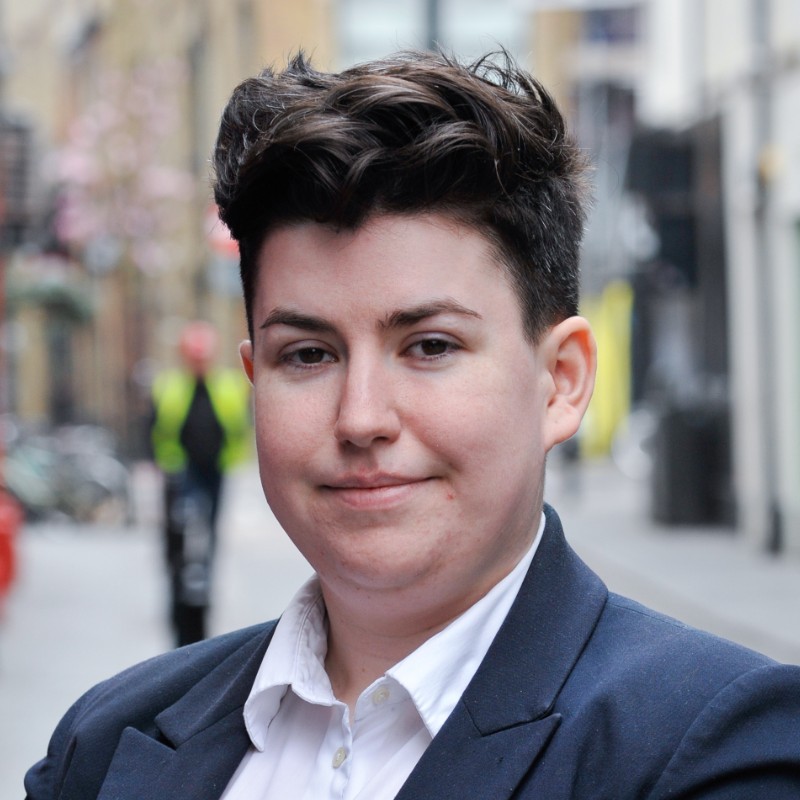
Annabel MacGregor

Annabel MacGregor

"Getting things built in renewable energy is mostly paperwork, politics, and patience. Ten years in, I'm reasonably good at all three."

Available now 📍 London, UK

The pitch

Development work is mostly unglamorous paperwork in service of getting things built. That means brokering compromise between investors who want certainty, engineers who want elegance, planners who want compliance, and communities who just want to know what's going on. The job is finding the middle ground everyone can live with, without losing sight of why it matters. I manage consultant teams, track regulatory changes closely, and keep internal stakeholders honest about progress. Less straightforward than it sounds.

I don't take "no" as a final answer. I work through problems more thoroughly than strictly necessary, as that's usually where the answer lies. I've taught myself GIS, picked up enough coding to be dangerous, and get genuinely interested in how other countries permit the same projects we're struggling to build here. Under pressure I'm calm. Observant rather than reactive. I tend to notice things others don't. In this field, that's usually where the real problem is hiding.

~1 GW
Pipeline developed
12 / 12
Planning consents
2
First-of-a-kind projects
10 yrs
In the sector

What I bring to a project

Full Development Execution

From site origination to planning consent, and everything in between. Planning applications, environmental permits, grid connections, land agreements. I manage the complete stack across solar, BESS, and e-methane without losing sight of what makes a project viable.

Data-Driven Origination

I do my own GIS work: site filtering, spatial analysis, location plans. I've written scripts to pull data others couldn't easily access, and built dashboards to make complex analysis legible to non-technical stakeholders. Faster decisions, fewer expensive surprises early in a project.

UK Planning System Depth

The planning system has more routes than most developers use. Full applications, minor and non-material amendments, planning conditions, permitted development rights, etc. Knowing when to deploy each is what separates a good application from a fast one. I know how to navigate the full spectrum.

Track Record

A closer look

Case Study · First of Kind

Project Starwell: UK's First Solar-Powered E-Methane Project

Capacity 15MW Solar + E-methane
Submission to Consent 6.5 months
Committee Vote 4:3 in favour
Status Deploying 2026

E-methane addresses two problems at once: 1. The grid connection backlog is pushing project timelines into the late 2030s; and 2. Demand for gas isn't disappearing by 2050. Biomethane is feedstock-limited, hydrogen is still waiting for buyers. E-methane fills the gap: a synthetic gas chemically identical to natural gas, made cleanly, injectable directly into the existing network. Rivan's version combines direct air capture of CO₂, alkaline electrolysis, and a Sabatier reactor, powered entirely by cheap solar. No grid connection, no battery backup. That's what makes it novel — the input that usually makes e-methane uneconomic becomes the cheapest part of the system. Nobody else in the world has done this.

Getting it through planning was a specific kind of difficult. Solar at scale creates landscape and visual impact issues. Gas production and transport creates safety concerns. Together they demanded careful communication: transparent enough to engage the LPA and local residents, protective enough of commercially sensitive IP, flexible enough to accommodate a technology still being developed in real time. I was the only person on the permitting team from early inception to receipt of consent.

The most useful thing I produced wasn't in any standard toolkit. I put together an Outline Safety Management Plan, taking the engineering team's detailed risk assessments and making them legible to case officers and local residents, mapped against planning policy. It forced the engineers to think concretely about long-term site operation and neighbourly impact, and gave the LPA something tangible to engage with rather than abstract specifications. The application went to planning committee and passed by a single vote, six and a half months after submission. Little Rose Lane deploys before the end of 2026. First of its kind, anywhere in the world.

Jan 2025 Project kick-off
Apr 2025 Public consultation
Jun 2025 Application submitted
Feb 2026 Planning committee
Feb 2026 Decision notice issued

Where I've worked

Technology

Scroll to zoom · drag to pan

~340MW UK consented
500MW Spain pipeline
13 Projects mapped

How I think about the work

Quality over compliance

Too many applications try to get consent on the minimum possible information, e.g. vague drawings, delayed assessments, documents designed to obscure. It erodes trust with the very people you need on your side, and the industry is paying for it. High-quality, transparent submissions aren't just the right thing to do. They move faster in the long run.

Communities deserve better than a consultation checkbox

The developer-community relationship is broken, and both sides share responsibility. What's needed is genuine dialogue: developers who answer real questions honestly without overpromising, and communities who engage with what's being proposed rather than what they fear might be. We can't build what the UK needs by talking past each other.

The barrier to new tools has never been lower

What once took years to learn can now be done in weeks. There's no excuse for not exploring what's available, e.g. a better way to visualise site data, a faster route through a technical problem, understanding how another country permits the same technology. I'm always looking.

Consensus takes weeks; poor decisions cost years

Pushing things through without proper review is a false economy. Building in time for rigorous input from engineers, planners, and neighbours (and presenting technical information clearly enough that people can actually engage with it) adds weeks to a programme but saves months later.

Writing & tools

Articles, scripts, and visualisations built as a byproduct of doing the work. Updated as new things get made.

Writing

How the English Planning System Works (And Why It Matters for Renewable Energy)

A 'plain-English' guide to navigating the English planning process: from preparing a valid application to getting a decision. Written from the field ✍️

Writing

The planning system isn't broken. It's underfunded.

The case for resourcing LPAs properly, rather than rewriting legislation that already works.

Tool

GIS Site Screening Workflow

A QGIS-based workflow for filtering candidate sites using constraint layers — land ownership, ecology, flood risk, grid proximity.

Visualisation

UK Grid Connection Queue

An interactive view of the grid connection backlog and projected timelines by region and voltage level.

Working with me

Senior project development expertise for energy transition companies, without a full-time hire. Site origination, UK and European permitting, land rights, and fractional Head of Development for companies building out their development function. Engagements scoped around specific deliverables. Day rate on request.

🗺️

Site Search & Assessment

Identify, screen, and score candidate sites for renewable energy or synthetic fuel facilities. Deliverables include a scored shortlist with constraint maps, infrastructure proximity analysis, and planning risk assessment.

📋

Permitting & Consent Strategy

Planning route assessment, EIA screening and scoping, environmental survey programme design, and pre-application engagement with the consenting authority. UK and Spain.

🤝

Land Rights & Option Negotiation

Heads of terms drafting, option to lease structuring, and landowner negotiation support. Often delivered alongside site search as an end-to-end origination mandate.

📊

Development Programme Review

Independent review of a project's milestones, dependencies, risk assumptions, and DEVEX budget. Useful for boards, investors, or incoming development leads taking over a live programme.

👥

Fractional Head of Development

Embedded senior leadership for companies that need to build or run a development function without a full-time hire. Typically 2–4 days per week, structured around your milestones and team needs.

💡

Advisory Retainer

Flexible advisory time (typically 2–5 days per month) for companies building their in-house development function who want on-call access to senior expertise.

Available to start immediately

Based in London. Happy to work remotely or in person across the UK and Europe.

Get in touch →

How I got here

I came to renewable energy during COVID, when the gap between the urgency of the climate crisis and the pace of the transition became impossible to ignore. The logic was simple: this is the most important problem of our generation, and getting projects built faster is one of the most direct ways to help. Planning seemed like the right place to contribute.

Renewable Connections gave me a rigorous grounding in how solar and BESS projects actually get built, from origination through to consent. It also gave me a front-row seat to the grid connection crisis (with some connection dates pushed back 5–10 years) forcing the industry to rethink fast. Amberside offered a clear, proprietary response to that problem. Renewco broadened my exposure across project types and geographies.

The move to Rivan was the most deliberate. E-methane offered a different answer to the grid crisis entirely: clean gas produced with cheap solar, injected directly into the existing network, no connection required. The technology was novel. More importantly, the problem it solved was real and urgent. I joined as their planning lead, took two first-of-kind projects through the system, and submitted what became the UK's first consented solar-powered e-methane development.

Now, after five years of building a track record in the renewable energy sector, I'm ready for the next challenge.

Where I've worked
Independent Project Development Consultant
Self-employed
Jun 2026 – Present
Freelance project origination and permitting advisory for energy transition companies. Specialisms: site search, UK and Spain consenting, land rights.
Head of Land & Planning (UK & Europe)
Rivan Industries
Jul 2024 – Jun 2026
VC-backed climate-tech startup developing solar-powered e-methane. Joined as second employee; built the UK land and planning function from scratch. Sole permitting lead on two first-of-kind projects including the UK's first consented solar-powered e-methane development.
Solar & Battery Developer UK
Renewco Power
Jun 2023 – Jul 2024
Independent renewable energy developer across UK, Spain and Italy. Led planning and consenting for solar and BESS projects including Milton Farm (49.9MW).
Development Project Manager
Amberside Energy
Sep 2022 – Jun 2023
Solar and battery storage developer. Led land origination and GIS-based site assessment across a multi-site UK portfolio.
Project Developer
Renewable Connections
Jun 2021 – Sep 2022
Managed a portfolio of six projects across Scotland and England, leading the full development lifecycle from site origination to planning application.
Design & Planning Project Manager
L&Q
Feb 2019 – Jun 2021
Led planning application for a 215-home residential development in Brentford; represented at planning committee and secured consent.
Town Planner
Barton Willmore (now Stantec)
Oct 2017 – Jan 2019
Graduate Planner
bptw partnership
Aug 2016 – Sep 2017
🎓
MA (Hons) Town & Regional Planning — First Class Honours
University of Dundee · 2016 · Includes Transatlantic Exchange Programme in Environmental Planning, University of Northern British Columbia
Professional Qualifications & Memberships
APM Project Fundamentals Qualification — Association for Project Management
Licentiate Member, Royal Town Planning Institute (LRTPI) · Working toward full Chartered membership (MRTPI)

Next chapter

I work best in smaller, more agile organisations. Quick decisions, genuine ownership, bold bets treated as a feature rather than a risk.

The most important thing I'm looking for is the chance to lead a team. After a decade of informal leadership (coordinating consultant teams, mentoring colleagues, running multiple projects in parallel) I'm ready to do it properly. Whether that means building a development function from scratch or stepping into an existing one, I want the real responsibility.

On technology, I'm open. Anything that makes a meaningful dent in the energy transition in the near term is worth exploring. What matters more than the technology is the quality of the problem and the commitment of the people working on it.

I'm UK-based and not looking to relocate, but happy with European travel where the work demands it. Company funding structure or stage isn't important to me, but I do need clarity on where the organisation is going and how it plans to get there in order to contribute effectively.

One non-negotiable: I won't work for any organisation involved in fossil fuel extraction. That's not a compromise I'm willing to make.

Get in touch

Based in London. Happy to work remotely or in person across the UK and Europe.

Send a message